Pulished on Jun. 18, 2026
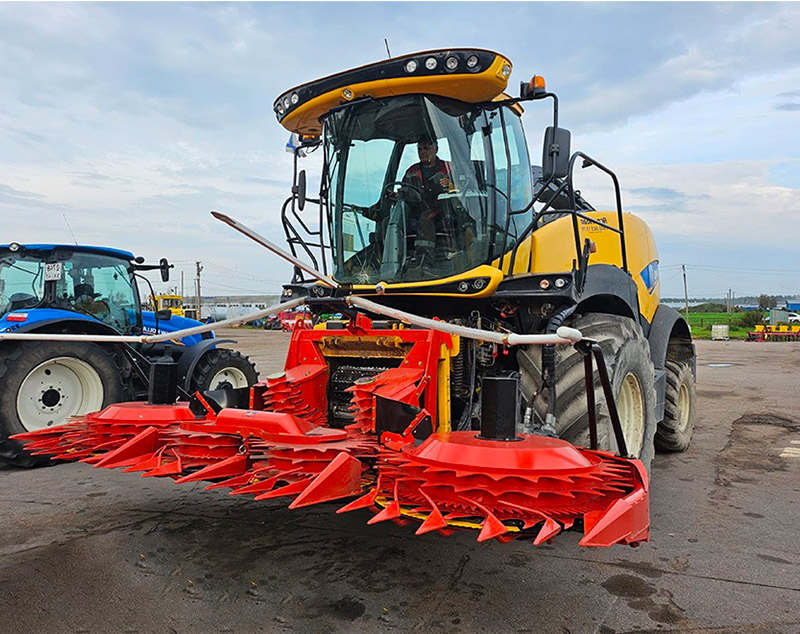
In the world of agriculture, farmers are continuously seeking ways to enhance efficiency and crop yield. The debate between Rotary Corn Headers and traditional maize headers is a pivotal topic among agronomists and farming enthusiasts alike. The pain points often revolve around crop loss during harvest, efficiency in tough weather conditions, and machine compatibility with existing equipment. For instance, many farmers struggle with a 20% increase in crop loss when using outdated harvesting techniques, prompting a search for better solutions. In this article, we’ll explore the key differences and advantages of rotary corn headers, such as those offered by Xinwanda, guided by real user cases and data analysis.
| Parameter | Rotary Corn Headers (Xinwanda) | Traditional Maize Headers |
|---|---|---|
| Harvesting Efficiency | Up to 95% grain savings | Typically 80% grain savings |
| Weight | Lightweight design at 600 kg | Heavier at approximately 800 kg |
| Speed | Harvesting at 10 km/h | Harvesting at 6 km/h |
| Cost | Average price of $30,000 | Average price of $20,000 |
| Durability | Lasts up to 10 years | Lasts about 5 years |
Understanding the operational scenarios where each header excels is crucial. Rotary corn headers, such as those from Xinwanda, thrive in uneven terrain or adverse weather, making them an essential choice for diverse farming environments. Real user experiences indicate that a farmer operating in hilly terrains reduced harvesting time by 25% using a rotary corn header. In contrast, traditional headers are often limited to flat fields, resulting in a greater risk of damage and inefficiency.
While rotary corn headers come with a higher initial investment, their long-term benefits are undeniable. Farmers can achieve a measurable increase in profitability; for instance, one farmer reported a 30% increase in profits due to reduced grain loss and improved harvesting efficiency after switching to a rotary corn header. Conversely, traditional maize headers are less expensive but may incur higher operational costs over time, given their propensity for wear and increased grain loss.
Feedback from users offers valuable insight into performance. A farmer named Thomas shared that after switching to a Xinwanda rotary corn header, he experienced "more than double the harvesting speed and significantly less crop damage." Another user expressed satisfaction with the durability, noting that his rotary header performed effectively in both wet and dry conditions without requiring frequent repairs, unlike his previous traditional header. These testimonials highlight the significant advancements in technology and user satisfaction with rotary corn headers.
When it comes to selecting a corn header, the rotary corn header stands out for efficiency and durability. If your priority is maximizing yield and minimizing crop loss, the rotary option is unequivocally the better choice. For instance, based on in-depth evaluations, farmers operating in varying conditions rated Xinwanda rotary corn headers significantly higher than traditional models. However, for those on a tighter budget or farming only in optimal conditions, traditional maize headers may still fulfill their requirements.
In conclusion, rotary corn headers are ideal for progressive farmers eager to enhance their operations, particularly in challenging scenarios. They are perfect for large-scale operators needing speed and efficiency. In contrast, traditional maize headers may suit smaller farms operating under less strenuous conditions or those with limited resources. It\'s critical to assess your specific needs to choose the right header for your farm.
If you are ready to boost your farming efficiency and improve your bottom line, consider exploring the advanced features of Xinwanda rotary corn headers. For personalized recommendations and to see the headers in action, visit this link.
The primary advantage is improved harvesting efficiency and grain retention, often resulting in a 95% grain savings compared to traditional methods.
Yes, they typically cost more upfront but offer long-term savings due to their durability and efficiency.
Yes, rotary corn headers are designed to operate effectively in various terrains, including hilly and uneven fields.